Request Appointment
As a parent of a child with a cleft lip and palate, you might face many challenges in their early development. From feeding issues to ensuring proper speech and dental growth, it can feel overwhelming. However, understanding the importance of reaching key feeding milestones and receiving timely orthodontic care can make a world of difference in your child’s progress.
This blog aims to offer valuable insights into how parents can support their child’s feeding milestones while managing orthodontic needs. From birth through toddlerhood, we’ll guide you through the feeding journey and explore how orthodontic care, especially for cleft lip and palate, plays a vital role in long-term success.
Let’s explore how early intervention and proper care can pave the way for your child’s brighter, healthier future.
Understanding Cleft Lip and Palate: A Quick Overview
A cleft lip and palate are congenital conditions that occur when a baby’s lip or the roof of their mouth (palate) does not fully form during pregnancy. A cleft lip refers to a gap or opening in the upper lip, while a cleft palate is a gap or opening in the roof of the mouth. These conditions can range from mild to severe, affecting one side or both of the lip and palate.
According to the American Cleft Palate-Craniofacial Association, approximately 1 in 700 babies is born with a cleft lip and/or palate. While the exact cause is often unknown, a combination of genetic and environmental factors may contribute. These birth defects can impact a child’s ability to eat, speak, and even hear, requiring early and comprehensive care.
Feeding and speech development are among the first areas affected by cleft lip and palate. Infants with these conditions may have difficulty sucking and swallowing, which can make breastfeeding or bottle-feeding challenging. Additionally, as your child grows, the development of speech and dental structures will also be influenced by the cleft, making orthodontic care crucial from a young age.
Feeding Milestones in Young Children
Early Stage (Birth to 6 Months)
At this early stage, feeding can be a significant challenge for babies with a cleft lip and palate in Glen Allen. Traditional breastfeeding or bottle-feeding may not be possible due to the gap in the lip or palate, but specialized cleft feeding bottles and nipples are designed to help. These bottles control the flow of milk, which helps your baby get enough nutrition without the need for additional suction.
It’s important to consult with a pediatrician or speech therapist to ensure your baby is gaining weight appropriately and that feeding techniques are adapted to their needs. In some cases, feeding tubes may be necessary if the baby struggles to feed adequately from the bottle.
6 Months to 1 Year
As your baby grows, it’s time to start introducing solid foods and textured diets around six months. At this stage, children with a cleft lip and palate might experience challenges in chewing and swallowing, requiring patience and careful monitoring. It’s crucial to ensure that they are developing the oral motor skills needed for eating solid foods.
Many children with clefts also experience delays in feeding skills and may have difficulty transitioning to a variety of foods. Therapies such as feeding therapy or speech therapy can help ensure that the child builds proper oral motor skills necessary for solid food consumption.
1 Year and Beyond
By the time your child reaches their first year, you may notice significant progress in feeding. However, some children may still face challenges with food aversion or delays in speech. At this stage, continued feeding therapy and speech therapy are often beneficial to address any oral sensory issues and ensure that the child can eat a full range of foods without difficulty.
If you notice that your child is not meeting typical feeding milestones, don’t hesitate to reach out to a pediatric orthodontist or speech therapist for further guidance. Proper care at this stage can prevent long-term issues related to feeding and speech development.
Orthodontic Care for Cleft Lip and Palate
Orthodontics and Feeding
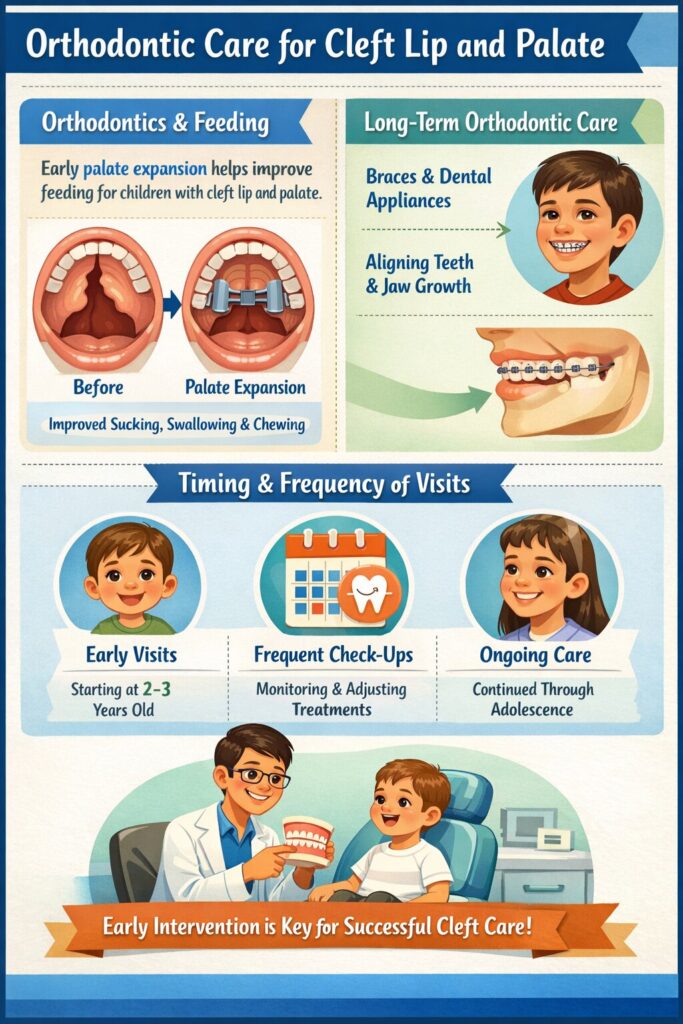
Early orthodontic care plays a pivotal role in addressing the feeding issues related to cleft lip and palate. One of the primary goals of orthodontics for children with a cleft is to expand the palate and realign the jaw. This not only helps improve the function of the mouth but also supports better feeding mechanics.
Palate expansion is particularly beneficial as it opens the palate area, making it easier for children to suck, swallow, and chew effectively. Early intervention with a pediatric orthodontist can ensure that your child can progress through the critical feeding milestones with fewer difficulties.
Long-Term Orthodontic Care
As your child grows, orthodontic care will evolve. Early orthodontic treatments often focus on jaw alignment and palate expansion, but later treatments may include braces, dental appliances, or other corrective measures to align the teeth and improve bite function. The goal of long-term orthodontic care is to provide a fully functional and aesthetically pleasing smile, ensuring that your child’s speech, eating, and overall health are supported.
Orthodontic treatments might be needed throughout the child’s early years, continuing into adolescence, depending on the severity of the cleft and the associated dental and facial growth concerns.
Timing and Frequency of Orthodontic Visits
When it comes to cleft lip and palate care, early intervention is key. Orthodontic visits should begin as early as the age of 2 or 3, depending on the child’s specific condition. These visits will likely be frequent in the early years to monitor and manage palate development. As your child grows, appointments may decrease in frequency, but regular visits are essential to ensure that orthodontic treatments are progressing as needed.
Common Challenges Parents Face and How to Overcome Them
Feeding Difficulties
Managing feeding difficulties during each stage of growth can be frustrating for parents. Specialized bottles and nipples are essential for early feeding, but as your child grows, it’s important to continue monitoring their development. Working with a pediatric speech therapist can help improve oral motor skills and feeding techniques.
Additionally, some children may experience a food aversion as a result of their cleft lip and palate. Ensuring a calm, supportive feeding environment and introducing a variety of textures can help your child overcome these barriers.
Orthodontic Concerns
Orthodontic care for children with clefts often requires multiple visits, which can be overwhelming for both parents and children. To manage this, it’s important to communicate openly with the orthodontist about any concerns.
Understanding the orthodontic treatment process, including the timeline for braces or palate expansion, can ease anxiety. Additionally, make sure to discuss insurance coverage and treatment costs to plan.
The Importance of a Team Approach
Collaboration between various healthcare professionals is essential for children with cleft lip and palate in Glen Allen. A pediatrician, speech therapist, and orthodontist should work together to provide coordinated care that addresses all aspects of the child’s development.
Pediatricians can monitor overall health, speech therapists can support feeding and speech development, and orthodontists can guide jaw and dental alignment. This multidisciplinary approach ensures that all of the child’s needs are addressed in a timely and comprehensive manner, creating the best possible outcomes for their growth and well-being.
As you navigate the journey of feeding milestones and orthodontic care for your child with a cleft lip and palate, early intervention and a coordinated care approach are key. Whether it’s through specialized feeding techniques, orthodontic treatments, or speech therapy, your child’s progress is within reach with the right support.
At Best Smiles Ortho, we are committed to providing comprehensive orthodontic care for children with cleft lip and palate. Our team is here to guide you every step of the way, ensuring your child’s journey toward a healthier, happier smile is as smooth as possible.
Contact us today to schedule an appointment and learn more about how we can support your child’s development.
People Also Ask
Can a cleft lip and palate affect my child’s speech development?
Yes, children with cleft lip and palate may experience speech delays. Speech therapy helps improve articulation and clarity as they grow.
How can I help my child transition to solid foods with a cleft lip and palate?
Start with soft, mashed foods while monitoring their oral skills. Consult with a speech therapist for techniques to support proper feeding.
How often should my child see an orthodontist for cleft lip and palate care?
Orthodontic visits typically start at age 2 or 3 and are frequent in the early years. As your child grows, visits decrease but remain essential for progress.
How does palate expansion help with feeding difficulties?
Palate expansion creates more space in the mouth, allowing for easier swallowing and better control during feeding, improving overall feeding abilities.
How can I find support for my child with cleft lip and palate?
Support groups, cleft care teams, and specialists like pediatric orthodontists, speech therapists, and pediatricians provide guidance and resources for parents.