Request Appointment

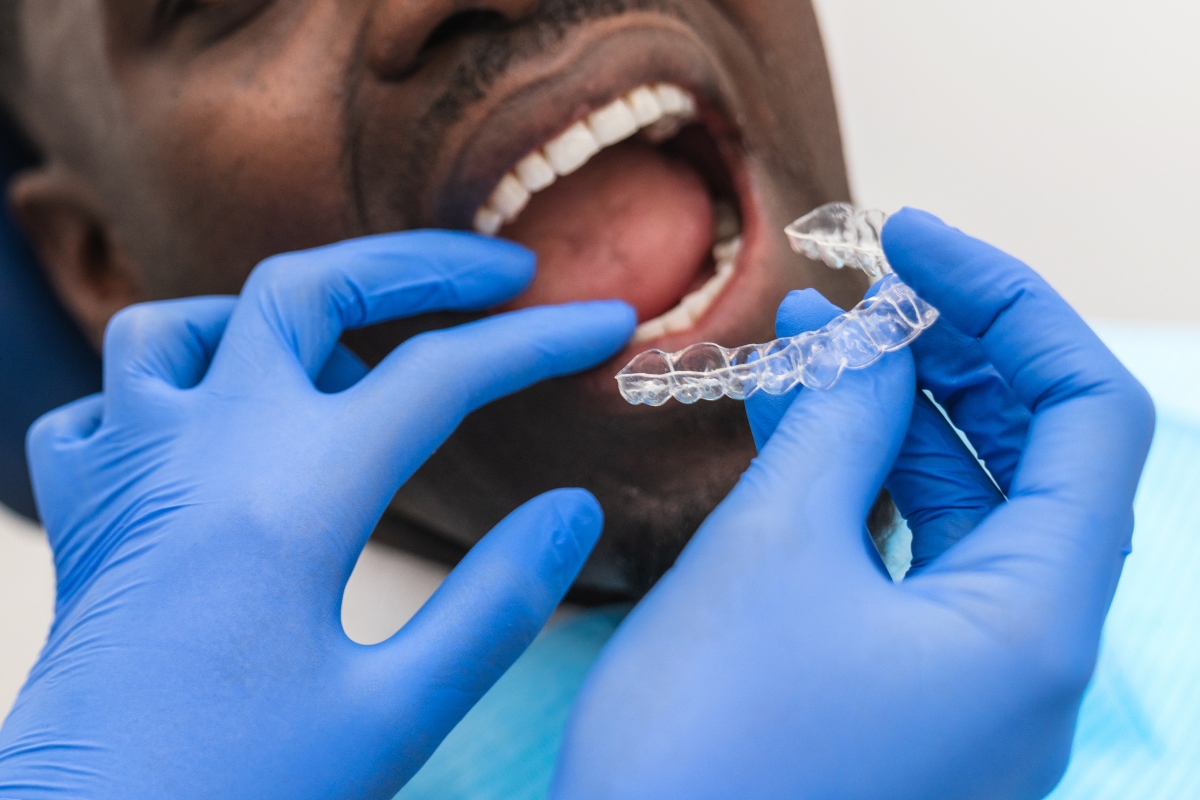
If you’re considering Invisalign as a way to straighten your teeth, you may have concerns about how it will affect your speech. You’re not alone! Many first-time users wonder if wearing aligners will make them sound different or cause difficulty when speaking. The good news is that while there might be a temporary adjustment period, these changes are usually short-lived, and with a little practice, you’ll be speaking just like you did before your treatment.
At Best Smiles Ortho, we understand the importance of comfort during your Invisalign journey. Our goal is to ensure that you not only achieve a beautiful smile but also feel confident throughout your treatment.
In this blog, we’ll walk you through how Invisalign may affect your speech, how long it typically takes to adjust, and offer helpful tips to get you back to speaking naturally in no time.
Understanding How Invisalign Affects Your Speech
Invisalign aligners are made to fit snugly over your teeth, so it’s natural to wonder how this new “foreign object” will affect your speech. For the first few days, you may notice subtle changes in how you sound. Many people report difficulty with certain sounds, particularly “S” or “T” sounds, and some might even develop a slight lisp.
This change occurs because the aligners cover the surfaces of your teeth, changing how your tongue moves inside your mouth. Normally, your tongue presses against the teeth when forming certain sounds, but with Invisalign for adults in Glen Allen, your tongue might need to adjust its movements, which can cause temporary speech changes.
This is completely normal and something almost everyone experiences. The good news is that this temporary speech impediment usually improves once your tongue and mouth get used to the aligners. It’s a sign that your body is adjusting to the change, and it’s typically not a permanent issue.
Invisalign aligners also have the advantage of being removable, so if you’re finding speech changes challenging, you can take the aligners out temporarily while you practice speaking or even during situations where you don’t want any changes to your speech (like public speaking or meetings). Over time, your muscles will adapt, and you’ll be speaking clearly and confidently again.
How Long Does It Take to Adjust to Speaking with Invisalign?
One of the most common questions people ask about Invisalign treatment is: How long will it take to adjust to speaking with the aligners in? The answer varies from person to person.
On average, most people begin to feel more comfortable speaking within a few days to a week after starting treatment. However, for some, it may take a bit longer, around two weeks, before speech feels natural again.
Several factors can influence how quickly you adjust:
- How often you wear your aligners: The more consistently you wear them, the quicker your mouth will get used to them. Wearing your aligners for the recommended 20-22 hours a day helps speed up the adjustment process.
- Personal comfort and speech habits: If you already have a naturally clear speaking style, the adjustment may be quicker. On the other hand, if you tend to speak quickly or have more complex speech patterns, it may take a little longer to adapt.
- The complexity of your treatment: If your teeth are moving significantly, you may feel some discomfort initially, but it’s usually nothing that affects speech permanently.
Remember, everyone adjusts at their own pace. Just be patient, and you’ll find that with a little time, you’ll feel just as confident as you did before starting treatment.
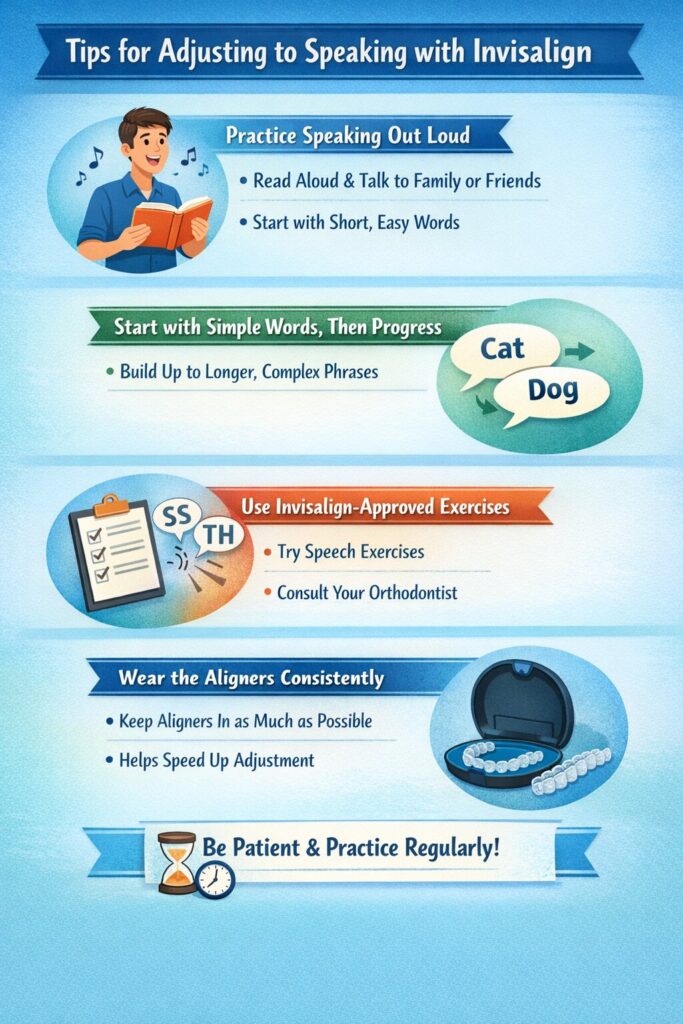
Tips for Adjusting to Speaking with Invisalign
While it may take a little time for your speech to return to normal, there are several things you can do to speed up the process and make the transition smoother. Here are some effective tips:
Practice Speaking Out Loud
One of the most effective ways to adjust is to practice speaking aloud. Try reading out loud to yourself or have conversations with family members or friends. Starting with easier words and short sentences will help you feel more comfortable.
Start with Easy Words, Then Work Up to More Complex Speech
Begin with words or sentences that feel natural to say and gradually increase the complexity. For example, say simpler words like “cat” or “dog” and then work your way up to more difficult ones. As your confidence grows, you can tackle longer or more complicated sentences.
Use Invisalign-Approved Exercises
If you’re finding that your lisp or speech difficulty persists, some orthodontists recommend specific speech exercises to help you adapt. These might include repeating certain sounds or words that are commonly affected by your aligners. Check with your orthodontist to see if they have any exercises they recommend.
Wear the Aligners Consistently
The key to a fast adjustment is to wear your aligners consistently. Not only does this speed up the alignment of your teeth, but it also helps your mouth get used to the sensation of the aligners being in place, which can help with speech. Avoid taking the aligners out frequently unless necessary, as this can slow down your progress.
Common Speech Problems to Expect with Invisalign and How to Overcome Them
Lisping
A lisp is one of the most common speech changes that people experience when starting Invisalign treatment. The lisp typically occurs because the aligners may prevent the tongue from moving freely as it normally does when speaking. Fortunately, a lisp is usually temporary. Most people find that it disappears after a few days as they adjust to the aligners.
How to Overcome It: Practice saying “S” and “Z” sounds slowly and clearly. If you find that you’re lisping on certain words, take your time and repeat the words to regain confidence in your speech.
Difficulty with Certain Words
You may find that certain words, particularly those with “S” or “T” sounds, are harder to pronounce initially. This happens because the aligners are changing how your tongue interacts with your teeth.
How to Overcome It: Take things slow. Start by saying simpler words with these sounds and gradually increase the complexity. You can also practice reading aloud to strengthen your pronunciation skills.
Source: Dublin Metro Dental
Practical Solutions for Overcoming Speech Difficulties
Make sure your aligners fit properly and are not causing any discomfort. Sometimes, slight adjustments to the aligners can resolve any minor issues with speech. If you’re still struggling, don’t hesitate to reach out to your orthodontist for further advice.
When to Consult Your Orthodontist
If you’ve been adjusting to your Invisalign aligners for a couple of weeks and still find that your speech is significantly affected, it’s a good idea to consult your orthodontist. Persistent speech issues can sometimes be a sign that your aligners aren’t fitting correctly, or there may be another issue that needs to be addressed.
Other concerns to look out for include:
- Pain or discomfort while speaking.
- Difficulty with breathing or swallowing due to the aligners.
- Excessive drooling or difficulty keeping your mouth closed while wearing the aligners.
Your orthodontist at Best Smiles Ortho will be happy to address these concerns and make any necessary adjustments to ensure you’re comfortable during your treatment.
Adjusting to speaking with Invisalign is a normal part of the treatment process, and while it may take some time, you’ll be back to speaking naturally before you know it. Be patient and practice speaking consistently, and you’ll notice improvement in just a few days.
If you’re having trouble adjusting or have concerns about your treatment, don’t hesitate to reach out to us. At Best Smiles Ortho, we’re here to guide you through every step of your Invisalign journey. Contact us today to schedule a consultation and take the first step toward achieving a confident, beautiful smile with Invisalign for adults.
What People Want to Know
How long does it take to adjust to speaking with Invisalign?
Most people adjust within a few days to two weeks, but it can vary depending on how often you wear your aligners and your comfort level.
What should I do if I have trouble pronouncing words with Invisalign?
Practice saying tricky words slowly and clearly. Gradually increase difficulty as you become more comfortable. If needed, consult your orthodontist for advice.
When should I consult my orthodontist about speech issues?
If your speech problems persist after a couple of weeks, or if you experience pain or discomfort, contact your orthodontist for further evaluation.
Is it normal to have a lisp with Invisalign?
Yes, a lisp is common when first wearing Invisalign, as the aligners can temporarily affect how your tongue moves. It usually resolves after a few days.
Will Invisalign affect my ability to eat or drink?
Initially, you might notice slight discomfort when speaking or chewing, but these issues are temporary. Aligners should be removed while eating or drinking.